


In an age dominated by smartphones, social media, and instant messaging, it is easy to assume that older communication technologies have become obsolete. Yet at Sindh Madressatul Islam University (SMIU) in Karachi, a group of students recently discovered that one of the world’s oldest modern communication systems remains remarkably relevant today.
We received a very good response from students. Many showed their interest to join the Pakistan Amateur Radio Society as SWL to start their Ham Radio journey.
AP2MS – M. Salman
On 25 April 2026, the Science Society at SMIU hosted an introductory Amateur Radio (Ham Radio) session that brought together students from various academic disciplines. The event was led by Muhammad Salman (AP2MS), Regional Coordinator of the Pakistan Amateur Radio Society (PARS), along with fellow amateur radio operators Kashif (AP2KM) and Rehan (AP2DDC), supported by SWL members Ahmad Feroz and Dewan Shahid.
Bridging History and Modern Technology
For many students, the session was their first exposure to amateur radio. What began as a lesson in communication technology quickly evolved into a deeper understanding of how radio continues to serve communities around the world.
Participants learned about:
- The fundamentals of amateur radio communication
- Different radio bands and communication modes
- Analog and digital communication systems
- Repeaters and Digital Mobile Radio (DMR)
- Emergency and disaster communications
- The role of amateur radio operators during humanitarian crises
One of the most surprising discoveries for students was the enduring relevance of a technology that has existed for more than a century.
As Muhammad Salman later reflected:
“They were surprised to know that a 100-year-old technology still has impact.”
Hands-On Learning Experience
The session was designed to be practical and interactive rather than purely theoretical. Students were introduced to live radio demonstrations, allowing them to observe and participate in real communications using amateur radio equipment.
To maximize engagement, participants were divided into smaller groups where they received guided instruction from experienced operators. Students practiced operating radios, making contacts through repeaters, and communicating using digital radio technologies.
This hands-on approach helped transform complex technical concepts into accessible learning experiences, sparking curiosity among students from both science and arts backgrounds.
Amateur Radio and Emergency Preparedness
A major focus of the session was the critical role amateur radio plays during emergencies and disasters.
Students explored real-world examples where amateur radio operators have provided essential communication links when conventional infrastructure failed. From natural disasters and search-and-rescue operations to humanitarian relief efforts, amateur radio continues to offer resilient and self-reliant communication capabilities.
Unlike internet and cellular networks, which depend on extensive infrastructure, amateur radio stations can often be deployed rapidly and operate independently during emergencies.
This aspect of the presentation resonated strongly with participants, many of whom expressed interest in learning more about emergency communication systems and preparedness.
Building the Next Generation of Radio Operators
The enthusiasm generated by the session exceeded expectations. Students showed significant interest in continuing their exploration of amateur radio and many expressed a desire to begin their journey as Short Wave Listeners (SWLs) before eventually pursuing amateur radio licenses.

Recognition and Future Collaboration
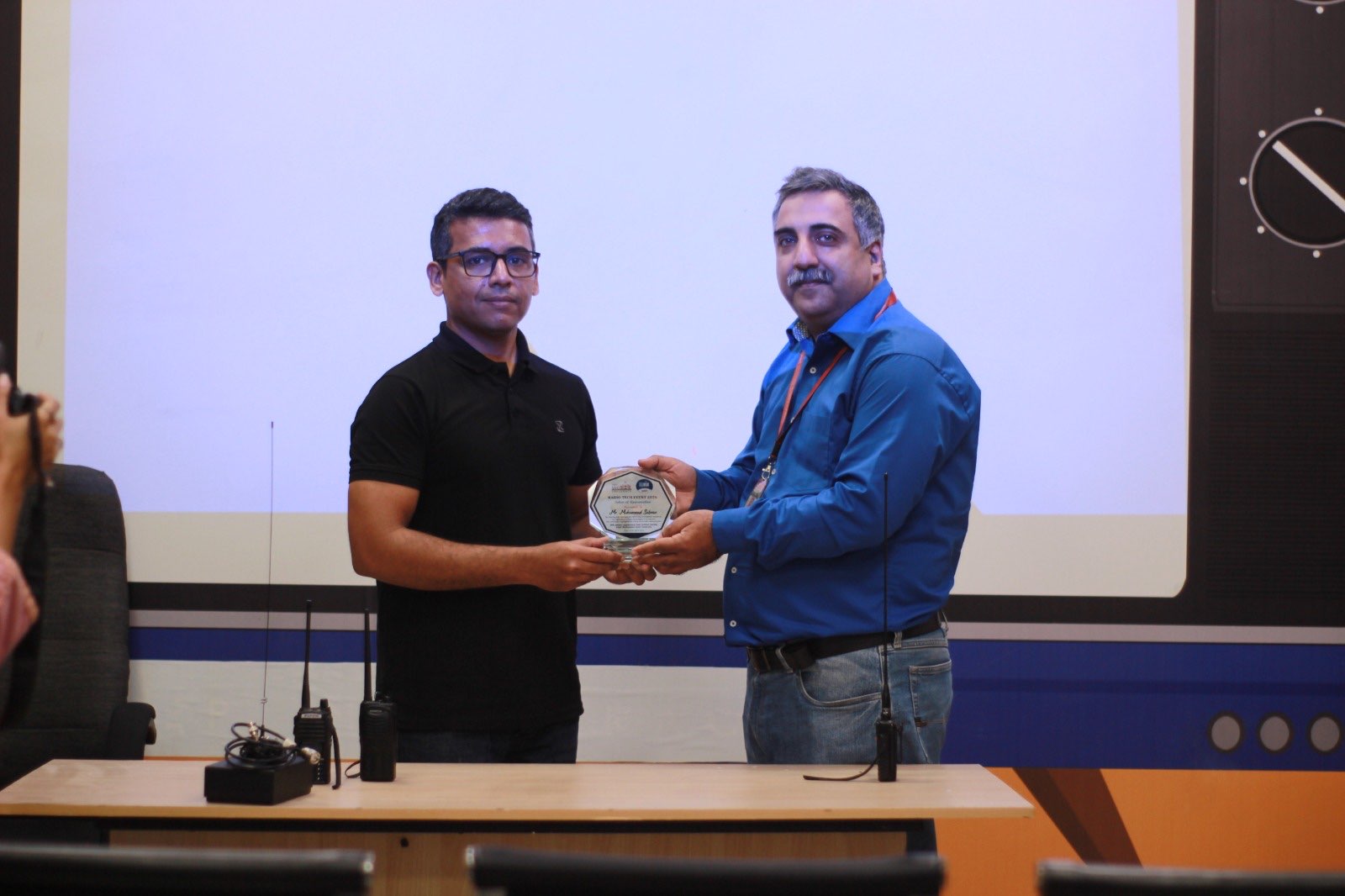
As a token of appreciation for their efforts in promoting amateur radio awareness and technical education, the Science Society of Sindh Madressatul Islam University presented a commemorative shield to representatives of the Pakistan Amateur Radio Society (PARS) following the session.
The gesture reflected the university’s appreciation for the valuable insights shared by the amateur radio team and highlighted the growing interest in practical communication technologies among students.
Encouraged by the positive response, PARS plans to continue engaging educational institutions across Pakistan through workshops, demonstrations, and field activities. Future sessions are expected to include outdoor field operations where students will gain hands-on experience setting up portable stations, constructing simple antennas, and making live contacts using both VHF and HF radio systems.
By introducing students to amateur radio, PARS hopes to inspire a new generation of communicators, experimenters, and emergency communicators who can contribute to both technological innovation and community service.
Conclusion
The SMIU amateur radio session demonstrated that even in an era of smartphones and high-speed internet, amateur radio remains a relevant and powerful means of communication. Combining science, technology, public service, and emergency preparedness, amateur radio offers students a unique opportunity to develop practical skills while becoming part of a global community.
The enthusiasm shown by SMIU students serves as a reminder that curiosity, learning, and innovation continue to thrive when experienced operators share their knowledge with the next generation.